

One of my favorite podcasts is Wú Rén Zhī Xiǎo (No One Knows), a Chinese show that explores technology, society, and what it means to be human in a changing world. In the latest episode, guest Li Jigang, a Chinese AI explorer and product thinker, said something about education that I haven’t been able to stop thinking about: for as long as we can remember, education has been like water. Learning means having knowledge poured into our brains through a hose. But with generative AI, the old model of rote memorization is losing its meaning. What matters most in the future, he said, is finding our own spark. Finding a little match inside us that lights a flame: what we’re good at, what we enjoy, what we’re truly passionate about.
I immediately remembered studying English vocabulary as a kid: copying each word dozens of times, going over them again and again all day, falling asleep to audio recordings at night. That was what being force-fed felt like. Teachers, parents, even we ourselves held the hose, packed full of facts and formulas, and we opened wide and drank as hard as we could, just to get it all to stick.
So why does that approach fall apart in the age of generative AI? Because today’s large language models don’t just hold nearly all of human knowledge, they have great memory, remarkable creativity, and they’re faster than we’ll ever be. If the competition is still about who can store more water in their brain, humans will lose every time. Just as the Industrial Revolution handed physical labor over to machines, AI is now taking over mental labor.
So what’s left for us?
I use AI constantly, in both work and daily life. When I reflect on how I actually interact with it, I never just dump a task into a prompt and submit whatever comes back. I come in with a rough direction, let AI expand on it, take what it gives me, adjust, and go again. Several rounds. Throughout that process, AI is the tool. But I’m the one deciding where it goes.
That sense of “where to go” is what I think where human value lives. AI is powerful, but it has no desires, no preferences, no burning need to figure something out. It waits (at least for now) for a human to speak first. And where does that first word come from? It comes from knowing what we want, caring about the outcome, having our own judgment and taste. Those things, current AI doesn’t have and can’t replace. It can give us an answer, and if we ask for more, it’ll keep going, and that’s what it does best. But which answers are worth keeping, and which are just noise? That’s on us to figure out. If we don’t know where we’re going, all those answers won’t mean much.
So how do we guide our children in this AI age? Li put it this way: we adults need to be like fish who live in water and actually know the water is there. If we can’t see the environment we’re in, we have no chance of stepping back to understand how it’s shaping us.
A number that stayed with me from a labor market report recently published by Anthropic: since ChatGPT launched, the rate of 22-to-25-year-olds entering AI-exposed occupations has dropped by roughly 14%. Not because they’re being laid off, but because companies have simply stopped hiring for those entry-level roles. The basic, ground-level work that young people used to do to get started? AI handles it faster and cheaper. Traditionally, that’s how they built experience and grew into their careers. But now, that path is quietly disappearing.
My kids are still very young. What the world will look like by the time they reach that age, I genuinely don’t know. But the qualities we’ve been trying to nurture in them — knowing what they want, thinking for themselves, not just going along with whatever gets poured their way — may matter even more than we originally thought.
How exactly to get there, honestly, I haven’t figured out. Have them talking to AI from an early age? Learning to code? Building structured thinking habits? There are too many possibilities, and I don’t know what any of them will actually lead to.
Li also said that society has inertia. An education system that’s run the same way for over a century can’t turn around overnight. There will inevitably be a transition period. Maybe that transition looks like this: kids spend their days inside traditional education, and come home to a family that’s already embracing change.
As parents, we go first, and gradually help our children see that when facing new tools and uncertainty, we can meet them with curiosity and our own judgment, rather than passively accepting whatever comes or outsourcing our thinking entirely.
We were born into an interesting time. From the internet to mobile, to AI, all in a few decades, fast enough to make our heads spin. Living inside the change, we sometimes can’t see the water we’re swimming in. Other times, we suddenly catch a glimpse of the wave pushing everyone forward. Some people ride it. Some slowly fall behind. Some are no longer in it at all. I hope my children and I will always be among those still in the wave.
Whether the flame inside them catches, and when, I don’t know yet. But at the very least, I want them to see that fire is possible.
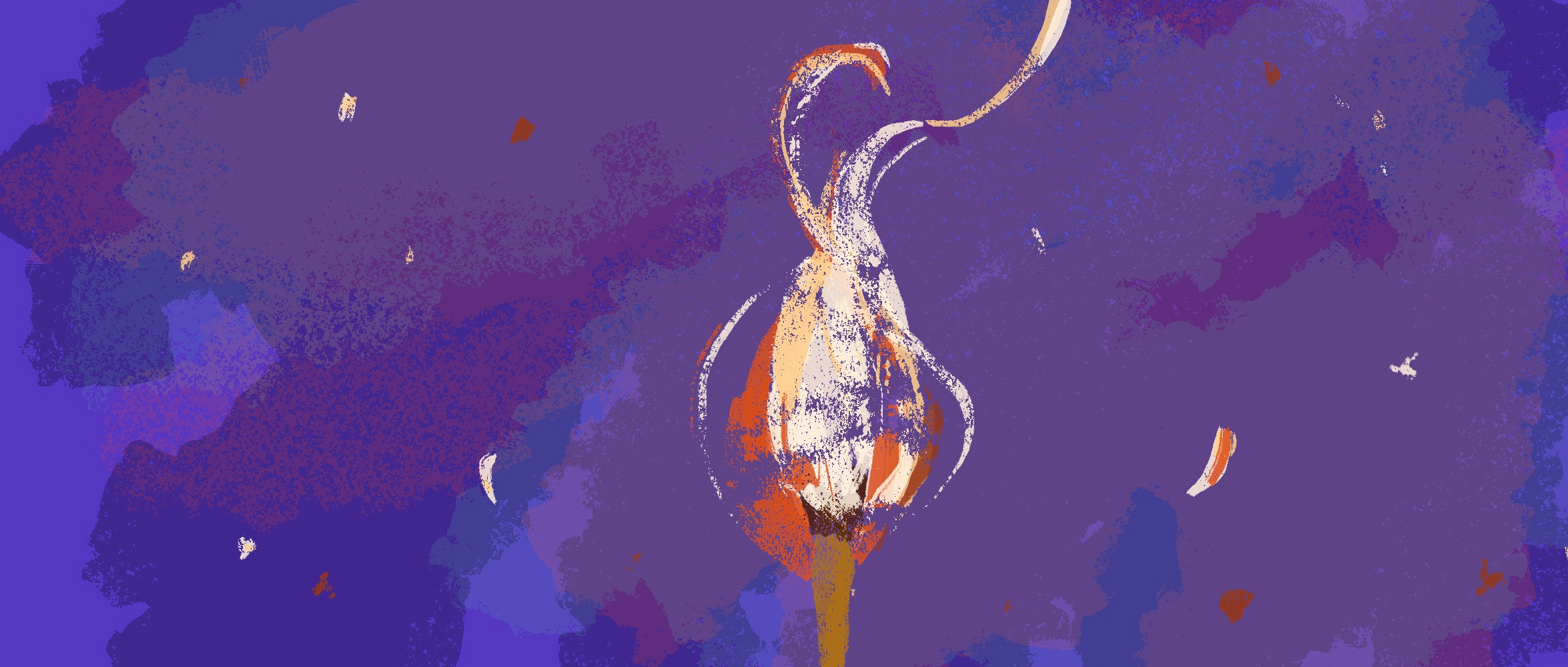
Header image: I drew a little matchstick, which we are using to try to light the flame within.
Hello Yingying,
Timely commentary you've posted here, for sure. I'm currently bouncing between two books on the topic of AI's influence in human life: YOUR DATA WILL BE USED AGAINST YOU by law professor Andrew Gutherie Ferguson and THE END OF CONFLICT by Simon Horton.
Reading your sentence, "If we don’t know where we’re going, all those answers won’t mean much." immediately reminded me of a conversation in Lewis Carroll's Alice's Adventures in Wonderland.
Alice... went on. “Would you tell me, please, which way I ought to go from here?”
“That depends a good deal on where you want to get to,” said the Cat.
“I don’t much care where —” said Alice.
“Then it doesn’t matter which way you go,” said the Cat.
“ —so long as I get somewhere,” Alice added as an explanation.
“Oh, you’re sure to do that,” said the Cat, “if you only walk long enough.”
I interpret Alice's encounter with the Cheshire Cat to indicate that "all those answers" do mean something, they mean we shall be led in whatever direction the most persuasive pitch-person suggests.
And, your words here, "Whether the flame inside them catches, and when, I don’t know yet. But at the very least, I want them to see that fire is possible," brought to mind Fritz Perls' idea that genuine self-awareness is the "glow produced within a coal from its own internal combustion."
Thank you for your thoughtful addition to the conversation. In friendship, @L